Our Spirituality
Spirituality of Our Foundress
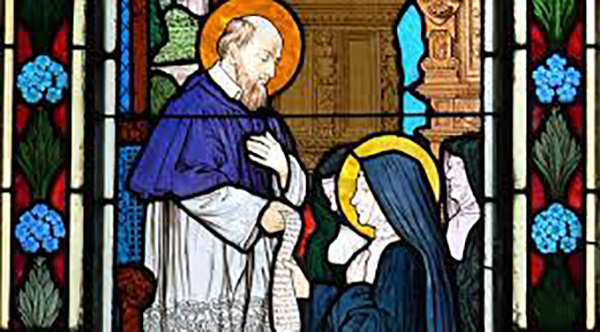
Spirituality is a lived experience. Christian life is a journey of grace and growth. Spirituality arises from experiencing God’s unconditional love, which leads to transformation.
From the beginning, Anne’s spiritual directors were Jesuit priests, and consequently, her life was deeply rooted in Ignatian spirituality. When the congregation was founded, its constitutions were written based on the Ignatian rule. She insisted that God is present in the world and active in our daily lives. She was keenly aware of how God guided her at every step. This is evident in her teaching: “To enkindle the fire of devotion in others, our own must be living and profound.”
years of misunderstanding and suffering. Her father invited her back to Dijon for recovery, promising that she could return to Dole afterward. Obediently, she went home. Influential priests and theologians attempted to persuade her to begin the mission in Dijon instead, but Anne firmly defended her God-given mission. She explained that her work was aligned with the needs of the Church and society. After one year, she returned to Dole with her parents’ blessings.
Anne returned home disappointed but continued her prayer, spiritual reading, and sacrifice. Gradually, she became more silent, contributing little to family conversations. She had already shared her inner experience and inspiration with her mother, and her father was aware as well
With companions who shared her inspiration and vision, Anne founded the Society of St. Ursula on 16th June 1606. She established its foundational principles: the spirituality of St. Ignatius, Christian education of girls and women, no enclosure, and her chosen motto: “Jesus Christ is my Life, Death is my Gain.”
1. Prayer Life
Mother Anne began her day with meditation and insisted on the examination of conscience. Prayer nourishes our union with God, helps us understand ourselves, and awakens our inner resources. She emphasised Scripture reading, reflection, participation in the Eucharist, and days of recollection. When we miss prayer, we miss life.
2. Humility
The first degree is recognizing the greatness of God and our own nothingness, giving Him praise for all our achievements.
The second degree is expressing this awareness in word and action.
he third degree is the humility of Jesus Christ—accepting insults, contempt, and humiliation for love of Him.
3. Poverty
For Anne, poverty meant total dependence on God and trust in Divine Providence. It reminds religious sisters to live simply, prioritize values, and practice solidarity with the poor. She advised not to seek comfort but to remain content with what is necessary.
4. Chastity
According to Mother Anne, chastity helps one live a life focused on God, remaining aware of His constant presence. Purity of mind and heart must reflect in thoughts, actions, behaviour, and modest dressing. Chastity brings inner freedom and effectiveness in mission.
5. Obedience
Mother Anne taught that with deep faith and love for God, the vow of obedience becomes easier. She presented the example of Jesus, who obeyed Pilate even during His excruciating passion, saying: “You would have no authority over me unless it were given from above.”
Obedience is also a mutual dialogue in decision-making. By this vow, we surrender our life to God and collaborate in building His Kingdom.
Conclusion
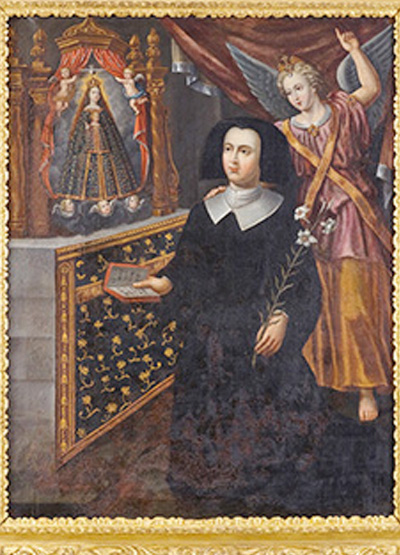
Reflecting deeply on her life, Anne De Xainctonge emerges as a remarkable woman of faith. Her depth, vision, and spirituality are truly inspiring. Today we speak of tolerance, avoiding corporal punishment, giving personal attention to students, understanding their family background, and correcting them with gentleness. Over 420 years ago, Mother Anne had already envisioned and implemented all these principles through a well-planned educational system
She was indeed a great and unmatched woman of her time.
Today, Mother Anne counts on you and me.
Sr. Prema SU